The Myth of Certainty: Why Your Need for Control is Keeping You Anxious
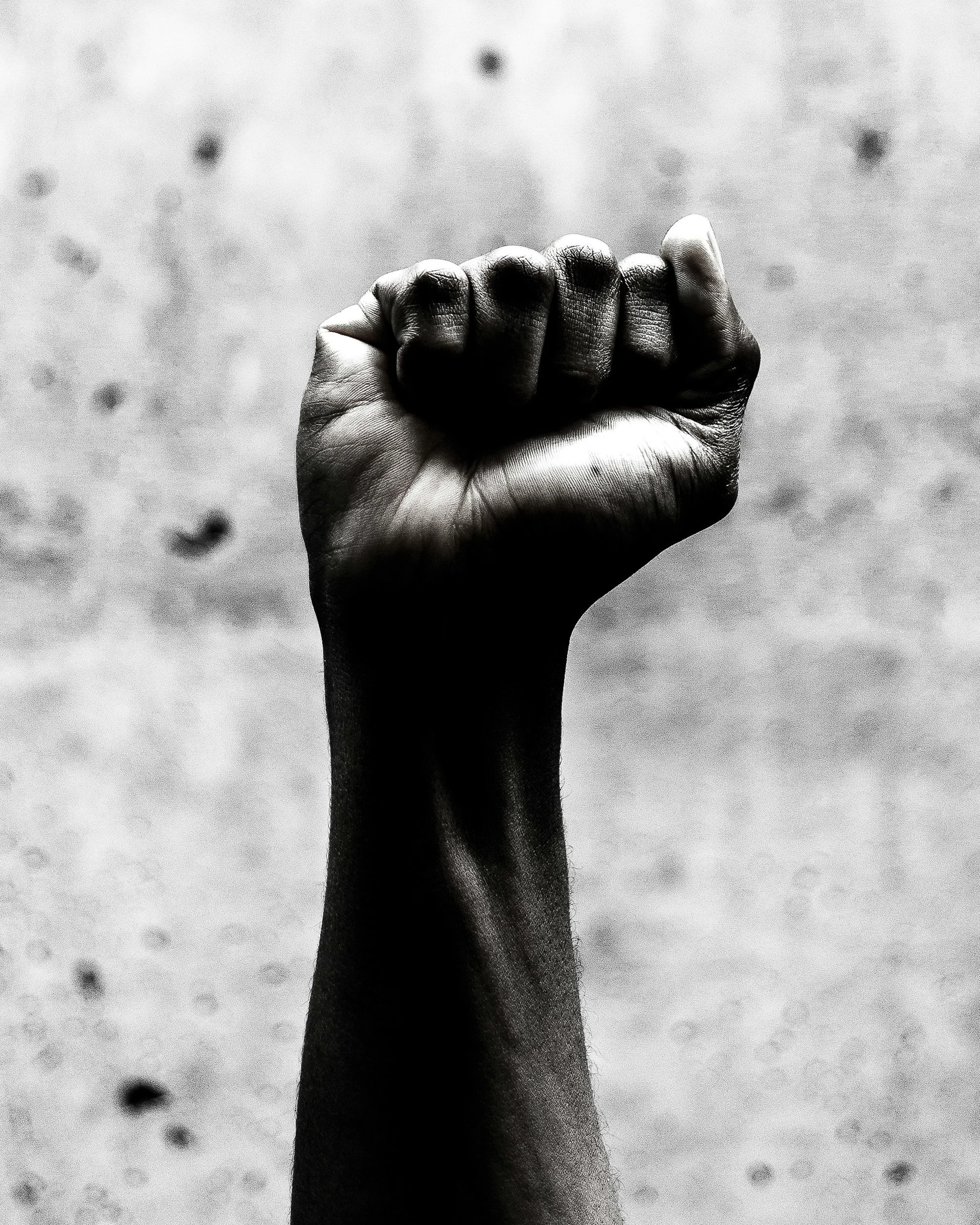
We've been sold a lie that if we just work hard enough, plan well enough, or anticipate every possible disaster, we can stay safe. We think that by gripping the steering wheel until our knuckles turn white, we can prevent the car from skidding.
But here's the truth: Control is an illusion. And the tighter you grip, the louder your anxiety becomes.
The Safety Net Made of Glass
Anxiety is a master of disguise. It tries to convince you that overthinking is actually ‘preparedness’. It tells you that if you stop worrying for five minutes, the wheels will fall off your life.
But let's look at the evidence. Does the worrying actually change the outcome?
Usually, no.
It just robs you of the energy you need to handle life when it actually shows up. When we try to control things that are fundamentally uncontrollable; such as what people think of us, the economy, whether we'll get sick, what happens tomorrow, we aren't being productive. We're just spinning our wheels in the mud and calling it progress.
Understanding Your Window of Tolerance
To move past the need for control, you need to understand your Window of Tolerance. This is your mental sweet spot where you can handle the ups and downs of life without losing your head.
Inside the Window: You're in "rest and digest" mode. You can think clearly, process emotions and handle a bit of stress without spiralling.
The Ceiling (Hyper-arousal) : When uncertainty hits, you hit the roof. This is the "fight or flight" zone; racing heart, panic and the frantic need to do something to feel safe.
The Floor (Hypo-arousal): You shut down. You feel numb, disconnected, or "checked out" because the lack of control feels too heavy to bear.
When we lack uncertainty tolerance, our window is narrow. Even a tiny bit of "I don't know" kicks us straight into panic.
What keeps your window narrow are the underlying patterns; unprocessed trauma, stored emotional memories, chronic nervous system activation. What pushes you outside your window are the triggers; the health symptom, the unpredictable situation, the uncertainty itself.
When you address the underlying patterns (what's keeping the window narrow), the triggers that used to send you into panic start to lose their power. Your nervous system learns it can handle uncertainty without going into survival mode.
Healing isn't about making the world more certain. It's about widening that window so you can stay upright even when the ground is shaking.
Spotting the "Safety Behaviours" (The Control Hooks)
When we're outside our window, we reach for Safety Behaviours. These are the things we do to try and lower our anxiety in the moment. The problem? They give you five seconds of relief but reinforce the idea that you can't handle uncertainty.
Common safety behaviours include:
Reassurance Seeking: Asking three different people for their opinion before making a minor choice.
Excessive Googling: Trying to "know" the unknowable (diagnosing symptoms, researching every possible travel delay).
Over-Preparation: Creating lists for your lists or arriving 45 minutes early for a 10-minute meeting.
Mental Rehearsal: Playing out a conversation in your head 50 times to make sure you have the "perfect" response for every scenario.
Procrastination: If I don't start it, I can't fail at it (a classic way to control the outcome by avoiding the input).
The Practice: Sitting with the Discomfort
If control is the problem, "Letting Go" is the solution.
As David Hawkins famously taught, the way out of the spiral isn't to think your way out it's to feel your way through.
When the urge to control hits, stop. Don't reach for the phone. Don't write the list. Instead:
Let the thought be there: The brain will throw "What if?!" at you. Don't engage with it. Just notice it's there and move your attention to the feeling.
Focus on the Energy: Where is the anxiety in your body? Is it a tightness in the throat? A knot in the stomach?
Sit with it: Don't try to ‘fix’ the feeling. Just let the physical energy run its course. It's the resistance that makes it last longer. When you stop fighting it, the feeling naturally dissipates.
If you let yourself feel the pressure of the uncertainty without trying to fix it, you realise something massive : the feeling didn’t kill you. The ‘I don’t know’ didn’t break you. That is how you widen your window.
How to Loosen the Grip
Fact Check the Fear: Ask yourself, "Is this a problem I can solve right now, or a feeling I need to process?" If there's no action to take, any further thought is just self-torture.
Drop the Shoulds: "I should know what's happening next." Why? Since when did humans become psychics? Give yourself permission to be as clueless as the rest of us.
When You Might Need More Support
Sometimes, the practices above are enough to start widening your window. You experiment, you notice shifts and gradually things get easier.
But sometimes, the armor is too heavy to take off alone.
You might benefit from working with a therapist if:
Your anxiety is running your life. You're avoiding situations, canceling plans, or can't focus at work because the "what ifs" won't stop.
Safety behaviors have taken over. You're checking, googling, seeking reassurance multiple times a day and can't seem to stop even though you know it's not helping.
Your window feels permanently narrow. Even small uncertainties send you into panic or shutdown and nothing you try seems to create lasting change.
Physical symptoms are constant. Racing heart, chest tightness, nausea, or insomnia have become your baseline rather than the exception.
There's a specific event or trauma behind it. Something happened that kicked off these patterns, and talking about it or thinking about it differently hasn't resolved it.
You're exhausted. You've been managing this solo for months or years, and you're tired of white-knuckling your way through every day.
If any of this resonates, you don't have to keep carrying it alone. Approaches like Integral Eye Movement Therapy (IEMT) and hypnotherapy work directly with where anxiety is actually stored in the nervous system and subconscious. So you're not just learning to cope better, you're actually releasing the patterns at their root.
The Goal Isn't Control - It's Peace
The goal isn't to be "in control." It's to be at peace regardless of who's driving.
When you stop fighting the fact that life is unpredictable, you stop wasting your best energy on "what ifs." You start living in the "what is."
Craving More Calm?
The Still Mind Toolkit for Instant Calm
Download a free toolkit with five simple techniques you can use immediately to restore a sense of calm when life feels overwhelming.
If any of this resonated, you don’t have to keep doing this alone.