

How Hypnotherapy can rapidly reduce anxiety and restore calm
If you’re feeling constantly overwhelmed, stuck in a cycle of worry, or just plain exhausted from stress and anxiety, you’re not alone. Life can feel like a never-ending to-do list, and sometimes, no matter how many deep breaths you take or how many self-help books you read, your mind just won’t slow down.
But what if there was another way to break free from the stress cycle, one that actually works with your subconscious mind, rather than against it? That’s where hypnotherapy comes in.
Why Do We Stay Stuck in Stress and Anxiety?
Stress and anxiety aren’t just things we “think” about, they’re deeply ingrained patterns in the subconscious mind. When you experience a stressful situation, your brain releases stress hormones like cortisol and adrenaline. Over time, if stress becomes chronic, your brain starts to stay in this high alert mode even when there’s no real danger.
That’s why even when you tell yourself to "calm down," your body doesn’t listen. It’s not about logic, it’s about the programming in your subconscious.
How Hypnotherapy Helps You Rewire Your Stress Response
Rewiring Negative Thought Patterns – Hypnosis helps identify and change subconscious beliefs that fuel anxiety, such as “I can’t handle stress” or “I have to be in control all the time.”
Activating the Relaxation Response – Hypnotherapy guides your mind into a deeply relaxed state, counteracting the body’s stress response and training it to enter a calm state more easily.
Creating Lasting Change – Instead of relying on willpower alone, hypnotherapy works with the subconscious to develop healthier coping mechanisms automatically.
What Does a Hypnotherapy Session Feel Like?
If you’ve never tried hypnotherapy before, you might be wondering, what does it actually feel like?
The good news is, it’s not like the stage hypnosis you see on TV (no eating raw onions!). It’s more like a guided meditation, where you enter a deeply focused and relaxed state. You’ll always be in control, fully aware of what’s happening, and able to bring yourself back to full awareness at any time.
During a session, we’ll use gentle techniques to help you access your subconscious mind, address the root of anxiety patterns and create new positive thought processes. Many people report feeling a deep sense of calm and clarity after just one session.
Does Hypnotherapy Really Work for Anxiety and Stress?
Yes and science backs it up. Studies have shown that hypnotherapy can significantly reduce anxiety, lower cortisol levels, and improve overall emotional resilience. Many of my clients come to me after trying everything else talking therapies, mindfulness, medication, only to find that hypnotherapy was the missing piece in their healing journey.
Craving More Calm?
The Still Mind Toolkit for Instant Calm
Download a free toolkit with five simple techniques you can use immediately to restore a sense of calm when life feels overwhelming.
If any of this resonated, you don’t have to keep doing this alone.

Hypnotherapy: The Ultimate iOS Upgrade For Your Mind
Imagine this: your mind is like an iPhone, full of apps (your thoughts, emotions, and memories) that need regular updates to run smoothly. Over time, some of those apps get buggy, slow down, or start to crash. Maybe you’ve got some emotional “bugs”; anxiety, bad habits, or unhelpful thought patterns, that just keep repeating.
But what if you could get a major upgrade for your mind? A refresh that would fix the glitches, improve performance, and make everything work seamlessly. That’s what hypnotherapy can do, it’s like giving your brain the ultimate iOS upgrade!
Let’s dive into what hypnotherapy is, how it works, and why it’s the mind’s equivalent of pressing “reset.”
What Is Hypnotherapy?
Hypnotherapy is a therapeutic technique that uses deep relaxation and focused attention to access the subconscious mind. It’s like a mental reboot that helps you uncover the root causes of unwanted behaviours, emotional blocks, and patterns that are holding you back.
While you’re in a relaxed state, you’re still fully aware of everything happening around you but your mind is more open to suggestion and change. Think of it like putting your phone into “developer mode” to make custom updates that improve the overall performance.
How Does Hypnotherapy Work?
Inducing a Relaxed State – First, you’ll be guided into a calm and focused state of relaxation. This isn’t like being “knocked out”, you’re still fully aware and in control. It’s more like a really deep meditation where your mind is more receptive to positive suggestions.
Reaching the Subconscious Mind – The subconscious mind is where your beliefs, memories, and automatic behaviors are stored. It’s like the hidden settings of your brain, running in the background without your conscious awareness. Hypnotherapy gives you the opportunity to access this layer of your mind and make changes that affect your everyday thoughts and actions.
Making Lasting Change – Once in this relaxed state, you’ll receive positive suggestions that help reframe negative thoughts, heal emotional wounds, and replace unhelpful habits with healthier ones. It’s like clearing out outdated software and replacing it with a smoother, more effective system.
What Can Hypnotherapy Help With?
Hypnotherapy isn’t about relaxation, it can help with a wide range of issues, such as:
✅ Reducing Anxiety and Stress – Reprogram your mind to handle stressful situations with calm and ease.
✅ Breaking Free from Bad Habits – Whether it’s smoking, overeating, or procrastination, hypnotherapy can help you shift into healthier patterns.
✅ Updating Identity – Replace self-doubt with a positive, empowered sense of self.
✅ Managing Pain – Hypnotherapy can help manage chronic pain and promote healing by altering the way the brain processes pain signals.
✅ Healing from Trauma – Let go of past trauma and emotional scars that are preventing you from moving forward in life.
✅ Improving Sleep – Address the underlying causes of insomnia and promote deep, restful sleep.
Why Is Hypnotherapy Like an iOS Upgrade for Your Mind?
Just like your phone needs regular updates to run smoothly, your brain needs periodic “updates” to clear out mental clutter, improve emotional responses, and adjust to new life circumstances.
Here’s how hypnotherapy works as the ultimate mind upgrade:
🔄 Clears Out Old Patterns – Just like you delete old files or apps that are no longer needed, hypnotherapy helps release outdated mental patterns that no longer serve you.
⚡ Improves Mental Performance – It enhances how your brain handles stress, focuses, and reacts to challenges. Think of it as boosting your mental speed and clarity.
💡 Enhances Your Self-Awareness – By accessing the subconscious, hypnotherapy helps you understand the root causes of your thoughts and emotions, allowing you to take control and make better choices moving forward.
🔧 Repairs Emotional “Glitches” – Those emotional roadblocks (fear, anxiety, trauma) that keep popping up? Hypnotherapy helps fix them so you can live more freely.
Is Hypnotherapy Safe?
Hypnotherapy is a safe, natural process. You’re never out of control, and you can choose to end the session at any time. Unlike the dramatic portrayal of hypnosis in movies, you’ll never be made to do something you don’t want to do. Instead, it’s all about empowering you to make the positive changes you’re ready for.
Imagine the Possibilities with Your Mental iOS Upgrade...
What if your mind could work for you instead of against you? Imagine being able to:
✅ Overcome anxiety and stress without feeling overwhelmed
✅ Make healthier choices without struggling
✅ Be more confident and sure of yourself
✅ Heal from past trauma and break free from emotional baggage
That’s what hypnotherapy can help you do, upgrade your mindset and start living with more clarity, calm, and control.
Craving More Calm In Your Life?
Download The Still Mind Toolkit for Instant Calm — a free guide with five simple techniques you can use immediately to restore a sense of calm, even when life feels overwhelming.
👉 Download here:
https://www.stillmindtherapies.com/free-toolkit
If you feel ready to go a little deeper, you’re warmly invited to book a consultation call and explore how we might work together.
👉 Book a consultation:
https://www.stillmindtherapies.com/consultationform

Why do I feel stuck in life when I have everything I need?
That feeling of being stuck, it’s frustrating, isn’t it? On the outside, everything looks okay. You’ve got the job, the routine, maybe even the things you once dreamed of. And yet, something feels off. Like you’re waiting for life to start… but you’re already in it.
Maybe you wake up every morning feeling like you’re going through the motions. Or you keep telling yourself, I should be grateful, but deep down, you can’t shake the sense that something is missing.
So, what’s going on? Why does this happen? And more importantly, how do you break free?
1. The “Invisible Cage” of Comfort
Sometimes, being comfortable is what keeps us stuck. Not because comfort is bad, but because it’s predictable. The same routines, the same thoughts, the same patterns, it’s all familiar. Even if we’re not happy, at least we know what to expect. And the brain loves predictability.
But here’s the catch: Growth and fulfilment don’t live inside that comfort zone. They live just outside of it, in the space that feels a little uncertain, a little scary… but also alive.
Ask Yourself: Where in my life have I traded growth for comfort?
2. The Silent Weight of Unprocessed Emotions
Feeling stuck isn’t always about where you are in life, it’s often about what you’re carrying. Old disappointments, unresolved emotions, the “should haves” and “what ifs” that sit quietly in the background… They add up.
Your mind might not dwell on them consciously, but your body remembers. And that emotional weight? It’s exhausting. It makes moving forward feel like wading through mud.
Ask Yourself: Is there something from my past I haven’t fully processed or let go of?
3. The Fear of Making the “Wrong” Move
Ah, analysis paralysis. The sneaky little voice that whispers: What if I make the wrong choice? What if I fail? What if it’s not worth it?
So instead of taking a step in any direction, we freeze. We wait for clarity, for certainty. But here’s the secret, clarity comes after action, not before it.
Ask Yourself: If I wasn’t afraid of making a mistake, what small step would I take today?
4. The Missing Spark: When Routine Replaces Purpose
Life isn’t just about ticking boxes. If every day feels like a copy-paste of the last, it’s natural to feel stuck. Humans need variety, curiosity andmeaning.
Maybe it’s time to shake things up, not in a drastic “quit your job and move to Bali” way (unless that’s your thing), but in a way that reignites you. A new hobby, a fresh challenge, reconnecting with something that once lit you up.
Ask Yourself: When was the last time I did something that genuinely excited me?
So, How Do You Get Unstuck?
Move first, figure it out later. Stop waiting for the perfect plan. Take one step in any direction and see what happens.
Clear the emotional clutter. Let go of the past baggage that might be holding you back. Hypnotherapy and IEMT can help with this.
Shake up your routine. Do something, anything, differently. A new route to work, a different morning routine, a new class. Small changes create momentum.
Trust that stuck is temporary. Feeling this way doesn’t mean you’re failing. It just means something needs to shift.
Final Thought: Feeling stuck isn’t a dead end. It’s a sign. A little nudge from your mind saying, Hey, there’s more for you than this. And that’s not something to fear, it’s something to be curious about.
Craving More Calm?
The Still Mind Toolkit for Instant Calm
Download a free toolkit with five simple techniques you can use immediately to restore a sense of calm when life feels overwhelming.
If any of this resonated, you don’t have to keep doing this alone.

The Power of Short Term Therapy : How Brief interventions Create Lasting Change
In recent years, there has been a growing shift toward short-term therapy models, structured, solution focused approaches designed to create significant change in fewer sessions. Traditional long term therapy has its place, but for many people, fast, targeted interventions can be just as, if not more, effective.
Two powerful modalities leading this movement are Integral Eye Movement Therapy (IEMT)and Hypnotherapy. Both focus on quickly neutralising emotional triggers, breaking negative cycles, and fostering deep transformation without requiring months or years of talk therapy.
So why is short-term therapy gaining traction, and how can approaches like IEMT and hypnotherapy help clients achieve real breakthroughs in just a few sessions? Let’s explore.
The Shift to Short-Term Therapy: Why Less Can Be More
The idea that therapy must be long-term to be effective is a common misconception. While some challenges do require ongoing support, many people struggle with specific emotional triggers, limiting beliefs, and trauma responsesthat can be significantly relieved in a shorter timeframe.
Short-term therapy models, including IEMT and hypnotherapy, are effective because they:
Address the root issue – Rather than endlessly analysing problems, they work on shifting the emotional and neurological patterns that keep issues in place.
Create rapid relief – Clients often experience significant changes in just a few sessions, making therapy more accessible and cost-effective.
Empower self-sufficiency – Instead of fostering dependency on a therapist, these approaches equip clients with tools to sustain their progress.
The reality is, many people don’t need years of therapy. They need a breakthrough, a shift in perception, a release of past trauma, or a rewiring of emotional responses.
This is where IEMT and hypnotherapy shine.
Integral Eye Movement Therapy (IEMT): Reprocessing Emotional Responses
IEMT is a powerful therapy that helps reprocess the way the brain processes emotions and memories. It’s particularly effective for people dealing with anxiety, trauma or intrusive emotional responses that seem to persist despite logic and self-awareness.
Unlike traditional therapy, which often focuses on discussing and reframing issues verbally, IEMT works by engaging eye movements to process and release emotional imprints held in the neurology.
How does IEMT work?
The therapist guides the client’s eye movements in specific patterns while they recall emotionally charged experiences.
This disrupts the way the brain has stored and retrieved that experience, allowing for a detachment from the negative emotion.
Clients often report that the intensity of their emotional response drops significantly, sometimes in just one session.
IEMT is not about reliving trauma. In fact, clients don’t need to describe their experiences in detail for it to be effective. It’s about shifting the neurological and emotional associations tied to a memory or belief, allowing the mind to reprocess it in a healthier way.
For many, this leads to immediate relief. Memories that once felt heavy and distressing begin to feel distant, neutral, or even insignificant.
Hypnotherapy: Unlocking the Power of the Subconscious
Hypnotherapy works by accessing the subconscious mind, where deep-seated beliefs, habits, and emotional patterns are stored. While traditional therapy often operates at the conscious level, hypnotherapy goes straight to the root of the issue, making change faster and more effective.
What makes Hypnotherapy so effective?
Bypassing resistance – Many people logically know what they “should” do but feel stuck emotionally. Hypnosis allows them to access the subconscious, where real change happens.
Reframing limiting beliefs – Whether it’s anxiety, self-doubt, or past trauma, hypnosis helps rewire deep-seated patterns that keep people feeling stuck.
Creating new emotional responses – Through guided suggestions and visualization, hypnotherapy helps clients respond in a calmer, more empowered way.
Many people notice profound shifts in just one to three sessions—particularly for issues like anxiety, phobias, confidence, and trauma recovery.
Why IEMT and Hypnotherapy Work So Quickly
Both IEMT and hypnotherapy bypass the slow, analytical processes of traditional talk therapy and instead target where change happens fastest, the subconscious mind and neurological patterns.
IEMT focuses on rapid emotional recalibration by updating the way the brain processes emotions tied to past experiences.
Hypnotherapy works on a subconscious level, making deep transformations feel natural and effortless.
This is why clients often describe feeling different after just one session. It’s not magic—it’s simply a more direct approach to change.
Who Can Benefit from Short Term Therapy?
Short term therapy isn’t just for people in crisis. It’s for anyone who wants to release emotional baggage, break free from limiting beliefs, or improve their mental and emotional well-being.
Common challenges IEMT and hypnotherapy help with include:
✅ Anxiety and stress
✅ Phobias and fears
✅ Trauma and PTSD symptoms
✅ Self-doubt and low confidence
✅ Breaking negative habits
✅ Overcoming emotional triggers
Many clients find that a few well structured sessions create more transformation than months of traditional therapy.
Breaking Free from the “Long-Term Therapy” Mindset
For decades, therapy has been framed as a long, ongoing process. While some conditions require continued support, many people simply need a powerful shift, a way to break free from emotional cycles that have been running in the background for years.
This is why short-term therapy models are on the rise. People are busy, and they don’t always have the time, resources, or need for endless sessions. They need results.
IEMT and hypnotherapy deliver those results by working with the brain’s natural ability to adapt, rewire, and heal, quickly and effectively.
Final Thoughts: A New Approach to Emotional Well-Being
The rise of short-term therapy models is changing the way people approach mental and emotional health. Instead of years of talking about problems, methods like IEMT and hypnotherapy focus on making deep, lasting changes in just a few sessions.
If you’re ready to experience rapid, transformative change, without spending months in therapy, these approaches could be the key to unlocking a calmer, more confident, and more empowered version of you.
Craving More Calm?
The Still Mind Toolkit for Instant Calm
Download a free toolkit with five simple techniques you can use immediately to restore a sense of calm when life feels overwhelming.
If any of this resonated, you don’t have to keep doing this alone.
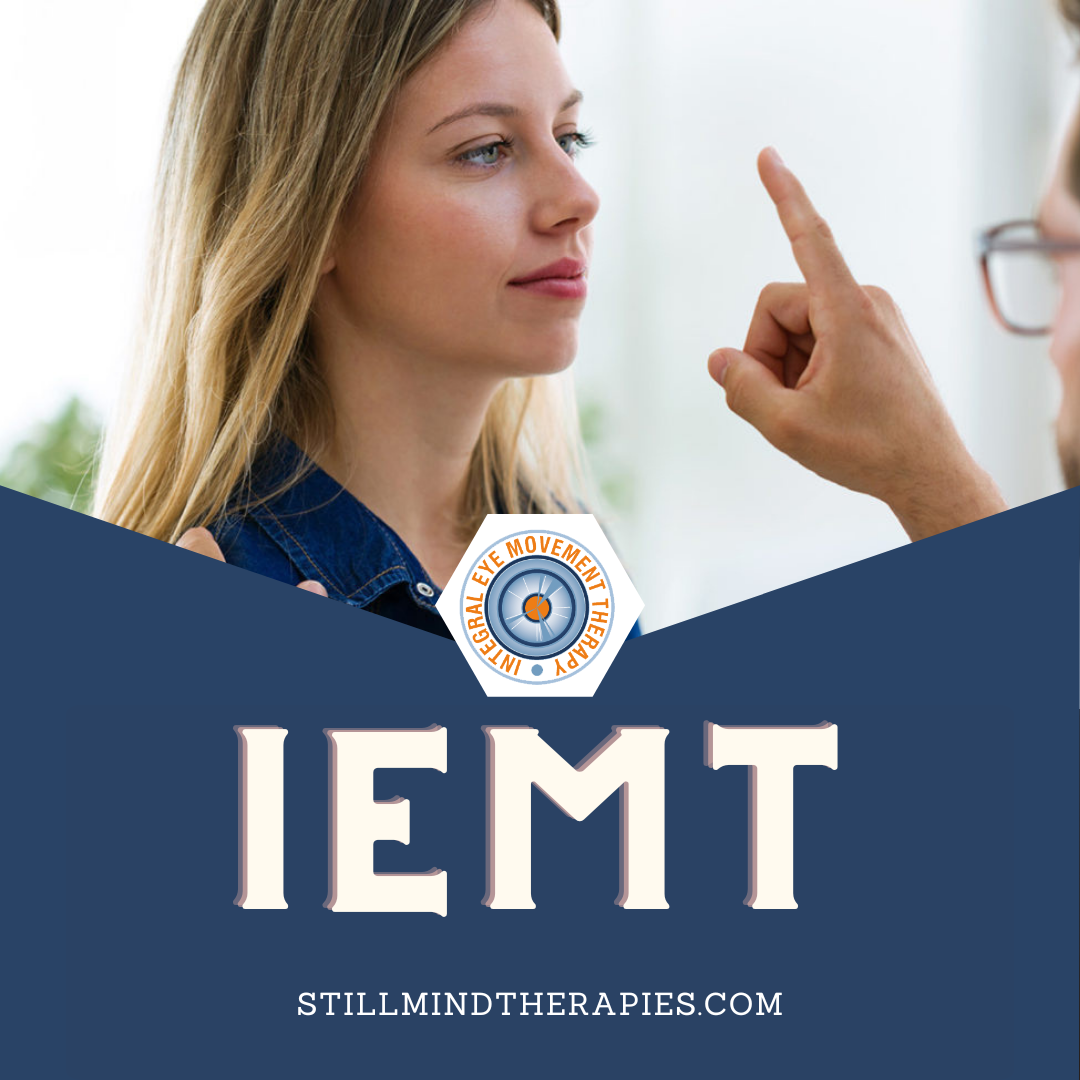
What is Integral Eye Movement Therapy?
We all carry emotional baggage in different ways. Maybe it’s the anxiety that makes your heart race when you're about to walk into a busy café alone. Perhaps it’s the frustration that flares up when someone interrupts you, leaving you feeling unheard, again. Or maybe it’s that one painful memory that sneaks up on you, making your stomach drop as if it just happened yesterday.
In today’s fast-paced world, people struggling with trauma, anxiety, and emotional distress are searching for solutions that work quickly and effectively. Traditional talk therapy can be life-changing, but it often requires months or even years of work before significant breakthroughs occur.
What if there was a way to achieve deep emotional change in a fraction of the time?
Enter Integral Eye Movement Therapy (IEMT), a transformative therapy that helps people process trauma, shift long-held negative emotional patterns, and experience relief in just a few sessions.
What Is IEMT?
Integral Eye Movement Therapy (IEMT) is a powerful modality that works by engaging the brain’s emotional processing centres to help reprocess distressing responses to trauma, anxiety and limiting beliefs. IEMT helps the brain ‘update’ distressing memories. This leads to a rapid reduction in emotional intensity, freeing people from long-held emotional distress.
How IEMT Works
During an IEMT session, the trained therapist guides the client through specific eye movement patterns while they focus on a negative memory associated with their issue. This process helps to:
· Reduce the intensity of emotional memories linked to past trauma
· Break automatic emotional responses (e.g., panic, shame, anger)
· Shift limiting beliefs that keep people stuck in negative cycles
· Create a sense of detachment from past emotional pain
This process doesn’t erase memories but neutralises their emotional charge. A painful event from the past may still be remembered, but without the same emotional sting or distress. The result? Many people experience a profound sense of relief within just one or two sessions, a process that can take months or years in traditional therapy.
Why IEMT Is Gaining Attention
1. It Works Quickly
Traditional therapy often relies on long-term verbal processing. IEMT, however, works directly with the brain’s emotional processing systems, allowing people to experience immediate shifts in emotional intensity. Many report relief within minutes of a session.
2. It’s Content-Free (No Need to Re-Traumatise)
For those who have experienced trauma, talking about painful experiences can sometimes re-trigger distress. IEMT doesn’t require clients to relive traumatic events—instead, it works with the brain’s emotional processing system, reducing emotional intensity without prolonged discussion.
3. It Works Where Other Therapies Have Stalled
Many people try talk therapy find they intellectually understand their problems but still feel emotionally stuck. IEMT bypasses the need for cognitive analysis and goes straight to the emotional root of the issue—offering relief where other therapies may struggle.
4. It’s Rooted in Neuroscience
IEMT aligns with neuroplasticity research, which shows that the brain can reorganize itself and form new emotional pathways. By shifting how emotional memories are stored, IEMT helps clients reprocess distressing responses, leading to lasting change.
Who Can Benefit from IEMT?
IEMT has been successfully used to help people struggling with:
Anxiety & Panic Attacks – By reducing the intensity of anxious memories, IEMT helps clients feel calmer and more in control.
PTSD & Trauma – IEMT effectively processes traumatic memories, reducing their emotional impact.
Depression & Low Self-Esteem – By shifting deep-seated beliefs about the self, IEMT helps clients move towards self-acceptance.
Emotional Triggers – IEMT neutralizes emotional reactions linked to past experiences, allowing for more balanced emotional responses.
Real Client Experiences
"I avoided driving for two years after a car crash. Even as a passenger, I felt anxious and jumpy. After two IEMT sessions, I was able to get behind the wheel again and feel calm." – Yvonne
"I felt constantly on edge at night after experiencing a home burglary, checking the doors multiple times. After IEMT, I was finally able to relax and sleep through the night." – Mark
"My panic attacks were ruining my life. After IEMT, I no longer feel that same fear when situations arise. It's great to have my life back!" – Erica
"I was attacked years ago and was diagnosed with PTSD. I kept having flashbacks and was afraid to go out. After IEMT sessions, I was able to go out alone, something I never thought I’d be able to do again." – Luke
The Future of Therapy?
With growing demand for fast, effective, and non-invasive mental health solutions, IEMT is proving to be a game-changer. While it may not replace traditional therapy entirely, it offers a revolutionary tool for rapid emotional breakthroughs.
If you’ve been feeling stuck in emotional cycles or frustrated with the slow pace of therapy, IEMT might be the breakthrough you’ve been looking for.
Want to Experience IEMT for Yourself?
If you’ve ever felt trapped by an emotional reaction you don’t understand or a memory that refuses to let go, IEMT might just be the key to unlocking a new way of being.
Craving More Calm?
The Still Mind Toolkit for Instant Calm
Download a free toolkit with five simple techniques you can use immediately to restore a sense of calm when life feels overwhelming.
If any of this resonated, you don’t have to keep doing this alone.

The Silent Alarm of High Functioning Anxiety

High-functioning anxiety is a term many resonate with, even though it’s not an official diagnosis. It describes a life where you seem to have it all together on the outside; meeting deadlines, maintaining relationships and projecting competence, while the inside feels like chaos.
It’s a silent alarm that rings constantly. It doesn’t stop when you’re at work, at home, or even when you’re trying to rest. And while you may “function,” it’s often at the expense of your emotional and physical well-being.
The Hidden Struggles Behind the Perfect Facade
Externally, someone with high-functioning anxiety may appear calm, organized, and reliable. But internally, they might be dealing with:
Overthinking and overanalysing: Every decision feels like it carries enormous weight.
Perfectionism:The constant belief that what you’ve done is never good enough, no matter how much praise or validation you receive.
Fear of judgment: Overanalysing every conversation or action, convinced you’ll be misunderstood or judged.
Working and crashing: A relentless cycle of pushing yourself beyond your limits, only to burn out and feel guilty for needing rest.
Self-sabotaging behaviours: Procrastination, avoidance or fear of starting new projects because of perfectionist tendencies.
Hidden coping mechanisms: Drinking, drug taking or overeating.
Emotional exhaustion: A chronic sense of heaviness that drains your joy, creativity, and connection to others.
This constant overdrive often leaves people feeling unworthy, isolated, and unable to imagine a life without anxiety dictating their every move.
Why Asking for Help Feels So Hard
One of the reasons high-functioning anxiety persists is that it hides in plain sight. Because you’re “managing,” it feels like you don’t have permission to ask for help. You may even feel ashamed to admit that behind the surface, you’re struggling.
But high-functioning anxiety doesn’t have to be a permanent state. You deserve more than just surviving. You deserve a life where you feel calm, capable, and free to embrace happiness.
Is This You?
If you can relate , you may be interested in support for high functioning anxiety
You've Been The Capable One Long Enough
What if you could actually be okay, not just look okay.